
CASE STUDIES / OPERATIONAL LEVEL
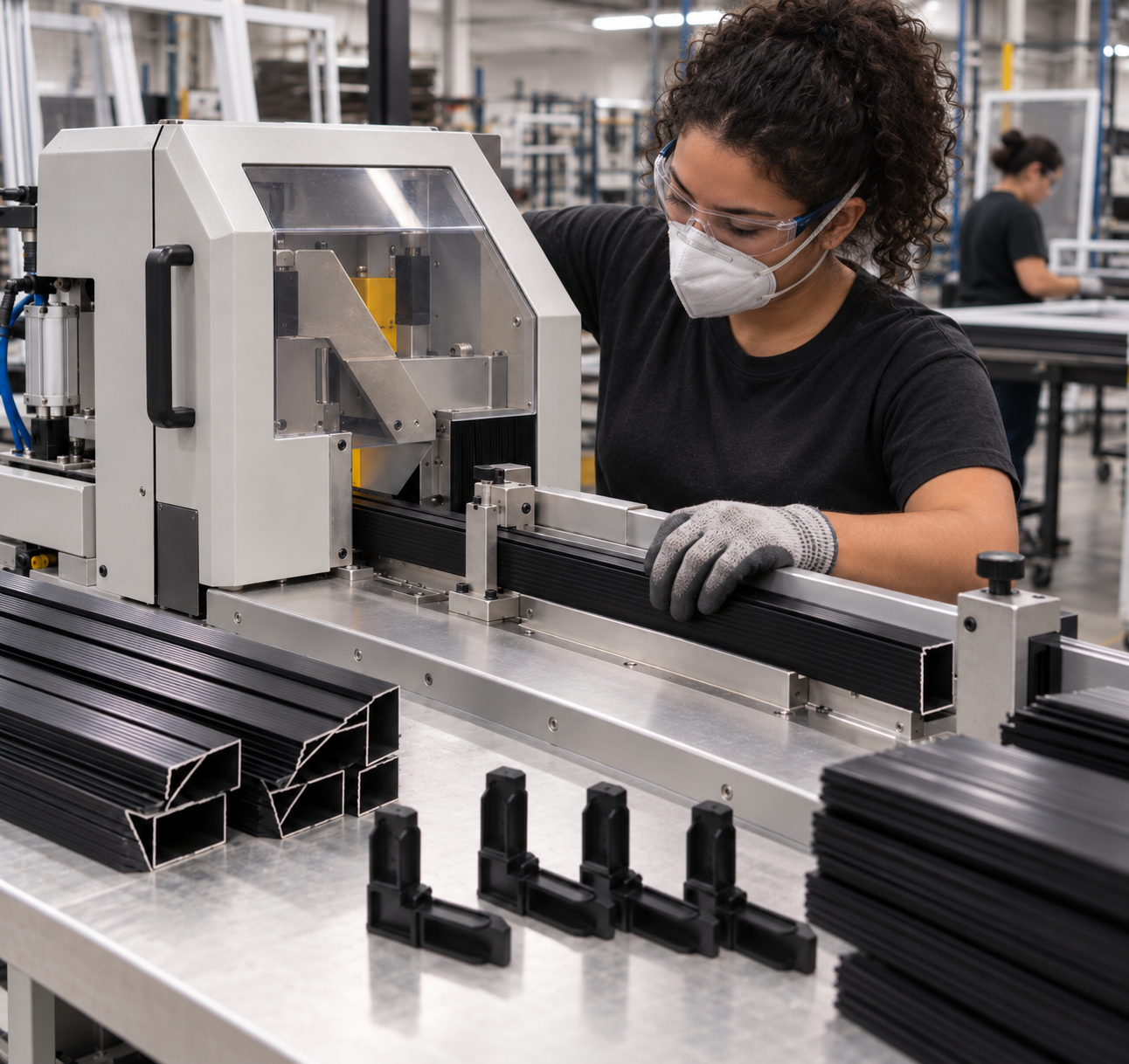
Representative image.
TJEG CAPABILITY IN PRACTICE
Restoring Production, Inventory, and Delivery Control in Door-Screen Manufacturing
Operational Level Case Study | Door-Screen Manufacturing, Warehouse Control, and Customer Delivery
A door-screen manufacturer was operating through continuous reprioritization rather than controlled fulfillment. Sales expedites interrupted active jobs, physical inventory did not correspond reliably with ERP quantities, warehouse material was dispersed, and employees were not accustomed to instructions defining priority, timing, and completion. TJEG’s founder assumed responsibility across production, warehouse and stockroom control, shipping, driver activity, and dispatching.
The founder reorganized the operation around available capacity, verified material, accountable work direction, and completed delivery. Scheduled production advanced to approximately one week ahead of customer-promised delivery dates, creating time for shop cleanup, inventory control, and more accurate materials accounting.
THE OPERATING CONDITION
Sales introduced expedited orders without a dependable view of shop capacity or existing commitments. Employees stopped one job to begin another, then returned after its sequence, materials, and workstation continuity had been disrupted. The shop remained active, but repeated restarting prevented predictable completion.
Employees had not received consistent instructions defining the assignment, timing, priority, and completion condition. When priorities changed, the floor received urgency without determining what should stop, what should continue, or how displaced work would be recovered.
ERP records indicated one inventory condition while the warehouse, stockroom, and production floor presented another. Dispersed parts prevented the system record from supporting reliable planning, replenishment, production release, or customer commitment.
WHAT TJEG RECOGNIZED
The visible problems were not separate matters of employee pace, warehouse organization, scheduling, and delivery. They formed one fulfillment system extending from accepted demand through material allocation, production, shipping, dispatch, and customer delivery.
Expediting could not improve customer response when each new priority interrupted another commitment. Correcting ERP quantities without locating and controlling the corresponding physical material would restore the record only temporarily. Stability required demand priorities, capacity, physical inventory, system quantities, workforce direction, and delivery activity to represent the same operating condition.
PHYSICAL INVENTORY AND ERP RECONCILIATION
TJEG’s founder conducted a full physical audit across the warehouse, stockroom, and production floor. Dispersed parts were located, counted, and reconciled with corresponding ERP records.
The warehouse was reorganized so material could be located, issued, returned, and counted under defined control rather than rediscovered whenever production required a component. Reconciled physical stock and disciplined transactions improved the reliability of ERP quantities.
This established a stronger basis for purchasing, scheduling, and production release. Availability depended upon verified material that could be located, issued, and used, not merely a quantity displayed electronically.
PRODUCTION CONTROL AND WORKFORCE DIRECTION
Production priorities were reconnected to available capacity and customer-promised delivery dates. Jobs received a defined sequence, employees received direct instructions and timing, and expedites were evaluated against the commitments they would displace.
The schedule became an operating commitment accounting for material readiness, labor, process sequence, active work, and the time required to complete rather than merely start an order.
As jobs advanced without continual interruption, completed output replaced accumulated work in process. Visible priorities and time expectations strengthened accountability and helped management distinguish workforce issues from material, scheduling, or authorization failures.
SHIPPING, DRIVER CONTROL, AND CUSTOMER DELIVERY
The founder incorporated shipping, driver activity, and dispatching into daily operating control, making order status visible beyond manufacturing completion.
The customer commitment remained open until the order was prepared, dispatched, transported, and delivered. Coordinating production with shipping and driver activity governed delivery as the final stage of the same operating sequence.
THE DEMONSTRATED RESULT
The reconstructed system advanced scheduled production to approximately one week ahead of customer-promised delivery dates, creating operating time unavailable under continuous firefighting.
Verification occurred through physical inventory counts reconciled to ERP records, production completion measured against customer-promised delivery dates, and driver-dispatch tracking that extended visibility through delivery. The released time supported shop cleanup, materials accounting, closer correspondence between physical stock and ERP quantities, and preparation of upcoming work.
The result arose from reducing interruption, controlling priority changes, verifying inventory, clarifying work, and governing fulfillment as one sequence.
BUSINESS CONSEQUENCE
Completing scheduled production ahead of customer-promised delivery dates moved the company from reactive recovery toward controlled execution. Management gained greater visibility over capacity, inventory, production, and delivery, while the workforce could complete assigned work without unmanaged expedites continually displacing the schedule.
Shop cleanliness and materials accounting also became part of production control rather than activities deferred whenever the organization was busy.
TJEG CAPABILITY SUBSTANTIATED
This case substantiates TJEG’s capability to restore end-to-end control across production, warehouse and stockroom management, ERP inventory accuracy, shipping, dispatch, transportation, and customer delivery.
TJEG applies this capability when reported inventory, capacity, production priorities, and delivery commitments do not represent one coherent operating condition. The response connects physical verification, system information, workforce direction, capacity-based scheduling, material accountability, and fulfillment execution under clear management authority.
HISTORICAL ATTRIBUTION
TJEG Applied Experience: This case reflects prior operational leadership experience incorporated into TJEG’s consulting capabilities.
RELATED CAPABILITY
-
Examine how leadership conduct, workforce feedback, operating constraints, technical instruction, workforce placement, and corrective response determine whether required performance becomes executable, credible, and sustainable.
DISCUSS AN OPERATIONAL-LEVEL MATTER
If your organization needs to reconcile physical inventory with ERP records, stabilize production priorities, control warehouse execution, or connect manufacturing output with shipping and customer delivery, contact TJEG to discuss the operating circumstances and support required.