
CASE STUDIES
TJEG's case studies examine how direct operating investigation, management authority, technical intervention, and disciplined execution address conditions affecting production, quality, customer delivery, workforce performance, and commercial continuity. Each entry explains the condition encountered, the mechanism governing it, the response applied, the evidence used to verify the result, and the capability that evidence substantiates.
These case studies present anonymized historical operating experience incorporated into TJEG's consulting capabilities. Employer, customer, facility, personnel, product, and program identifiers have been withheld to protect confidentiality, proprietary information, privacy, and security.

-
A precision metal fabricator faced the loss of a principal defense-sector customer while approximately 200 parts remained under MRB control and additional defective work continued advancing toward outside processing.
TJEG's founder determined that the visible finishing problem originated across fabrication, workforce capability, inspection, material disposition, external processing, identification, and release.
Corrective authority was extended across that sequence, recoverable and unrecoverable material received appropriate disposition, finishing standards were corrected through repeated timing, and customer-release control was restored.
Approximately 200 MRB-controlled parts were processed in less than one month, the customer was retained, assigned quantities increased, and the program continued across more than 200 lots involving over 30 part configurations.
Read Full Case Study
-
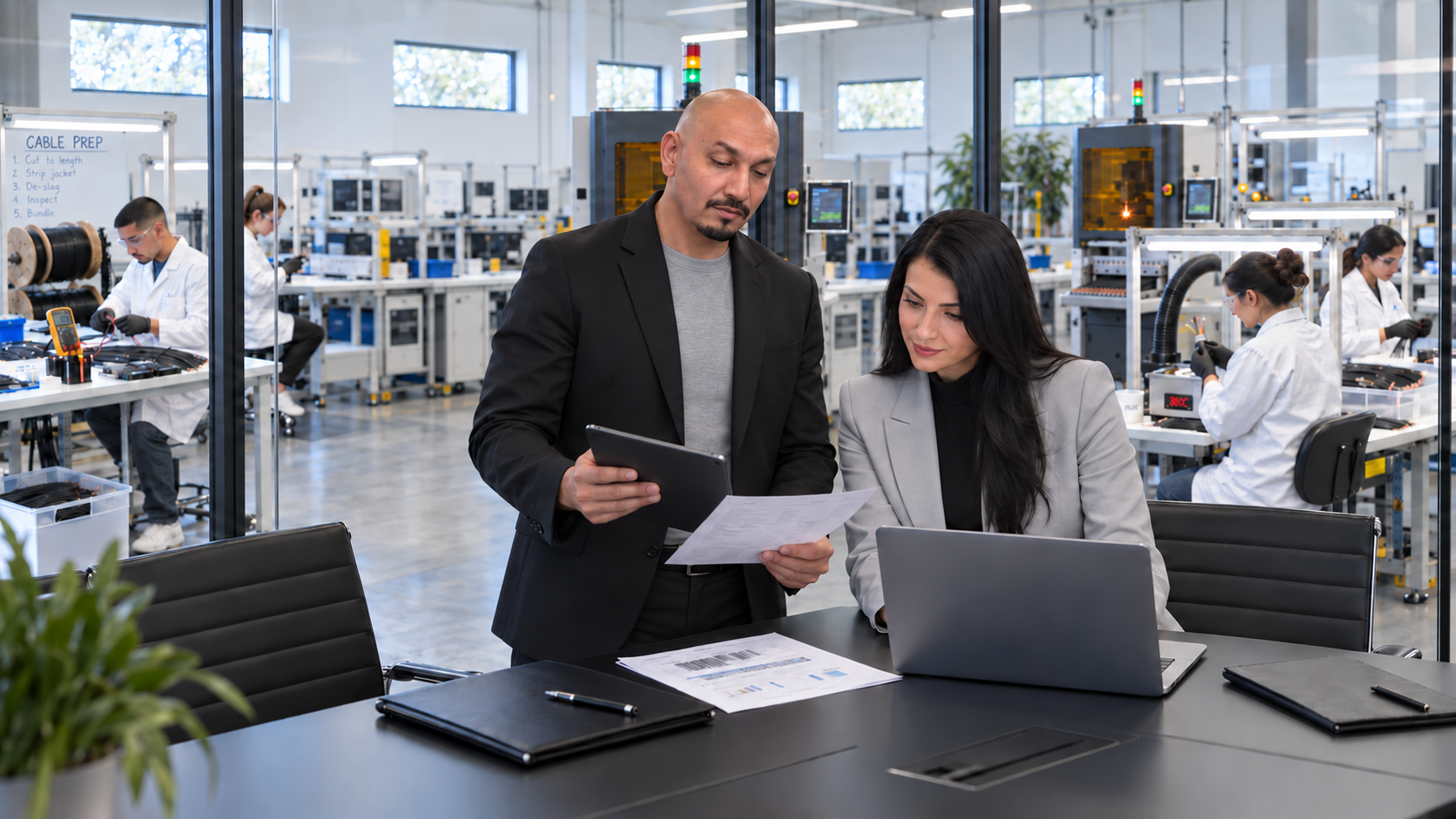
A specialized wire and cable manufacturer typically completed approximately 50,000 to 60,000 mixed units per week. TJEG's founder determined that the apparent capacity limit was created by fragmented job ownership, repeated individual handling, interrupted station use, uncontrolled transitions, and sequential equipment allocation.
The production system was reconstructed through station responsibility, cross-training, verified changeovers, completion-based sequencing, parallel machine use, and purpose-built fixtures that enabled controlled grouped processing.
The redesigned system completed approximately 100,000 mixed units in one 10-hour demonstration using existing production equipment, exceeding the committed objective by 100 percent and the former weekly output by approximately 67 to 100 percent.

-
A door-screen manufacturer was operating through continuous reprioritization. Sales expedites interrupted active jobs, dispersed material prevented physical inventory from corresponding reliably with ERP quantities, and production, shipping, and delivery were not governed as one fulfillment system.
TJEG’s founder assumed responsibility across production, warehouse and stockroom control, shipping, driver activity, and dispatching. He conducted a full physical audit, reconciled stock with ERP records, reorganized material control, established capacity-based production priorities, clarified workforce assignments and timing, and incorporated dispatch and driver tracking into daily operating control.
The reconstructed system advanced scheduled production to approximately one week ahead of customer-promised delivery dates. This released time for shop cleanup, materials accounting, inventory control, and preparation of upcoming work while improving management visibility from material availability through customer delivery.
-
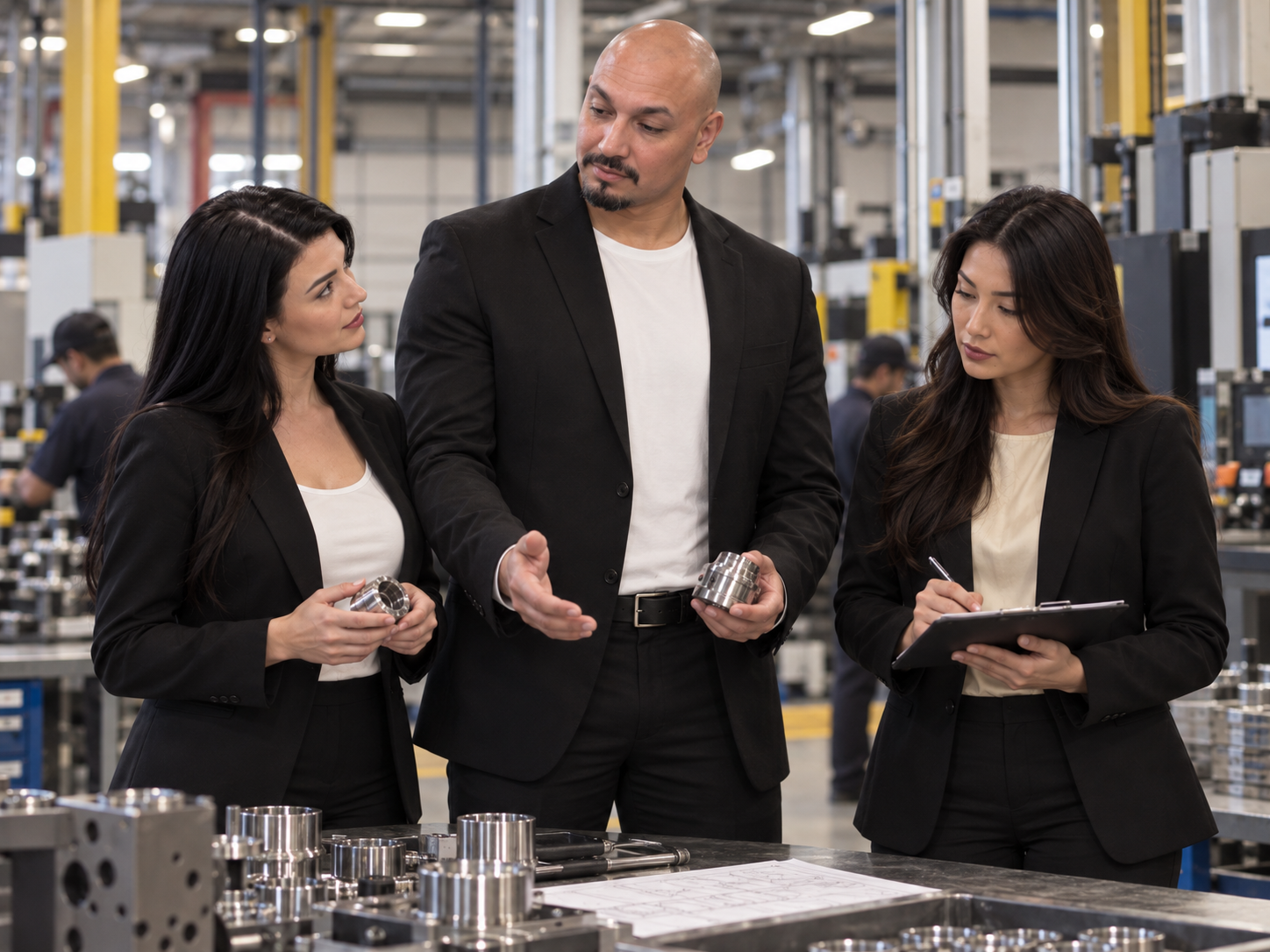
Across aerospace, defense, specialized cable, energy-technology, and consumer-product manufacturing, workforce conduct changed after leadership changed the operating conditions under its authority.
Direct demonstration made required pace and workmanship observable. Workforce feedback exposed constraints that were not always visible outside execution. Training, reassignment, process correction, and consistent management intervention made accountability more credible because the required performance became achievable and supported.
This synthesis examines the recurring evidence that culture is produced through leadership conduct, management systems, technical requirements, workforce capability, and daily operating conditions.
Its consequences extend from individual execution to functional coordination, customer performance, program continuity, commercial credibility, and the institution's ability to carry corporate direction.
-
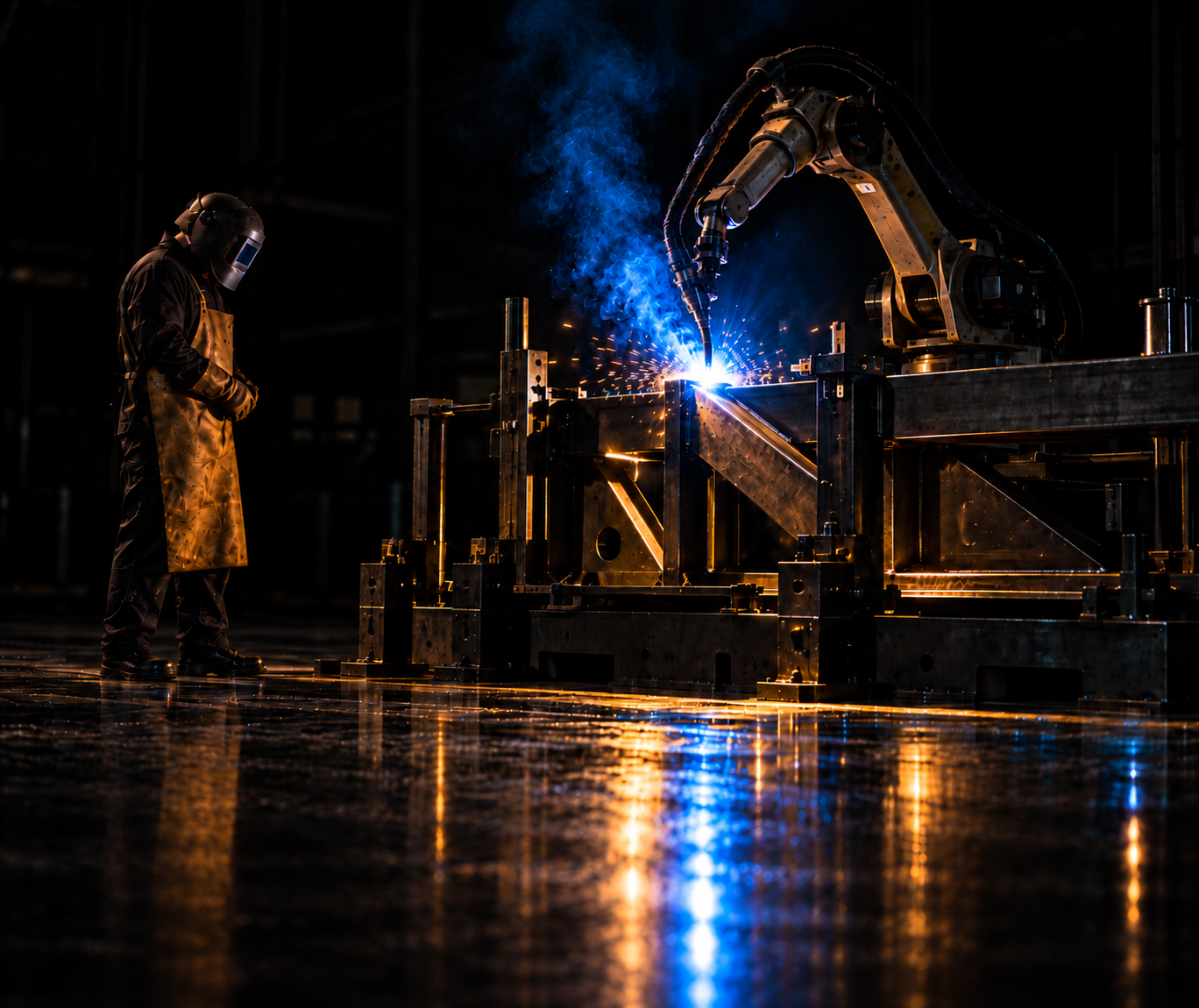
Across robotic welding and automated circuit-card assembly, TJEG’s founder observed how programmed equipment increased production speed and repeatability while remaining dependent upon human technical control. Robotic systems completed multiple weld joints, while automated surface-mount placement equipment positioned more than 200 components before circuit-card reflow at a rate manual placement could not match.
The experience demonstrates why automation requires trained operators, inspection before irreversible processing, post-process verification, recurring-defect escalation, and engineering authority capable of correcting the programmed system.
Automation changes where human capability is applied; it does not transfer accountability for production outcomes to the machine.